Biosecurity for Wales 2026 update: A busy year so far!
It was a busy start to 2026 for the Biosecurity for Wales team. We work with 13 island sites around the Welsh coast, all designated as Special Protection Areas (SPAs) or Sites of Special Scientific Interest (SSSIs) for their internationally important breeding seabirds.
Our work focuses on three priorities: preventing invasive mammalian predators, such as rats, from reaching the islands; maintaining surveillance to detect any incursions quickly; and responding rapidly to stop predators breeding and causing damage. One pregnant female rat can produce a colony of more than 300 in just eight months, making early detection and rapid action essential.
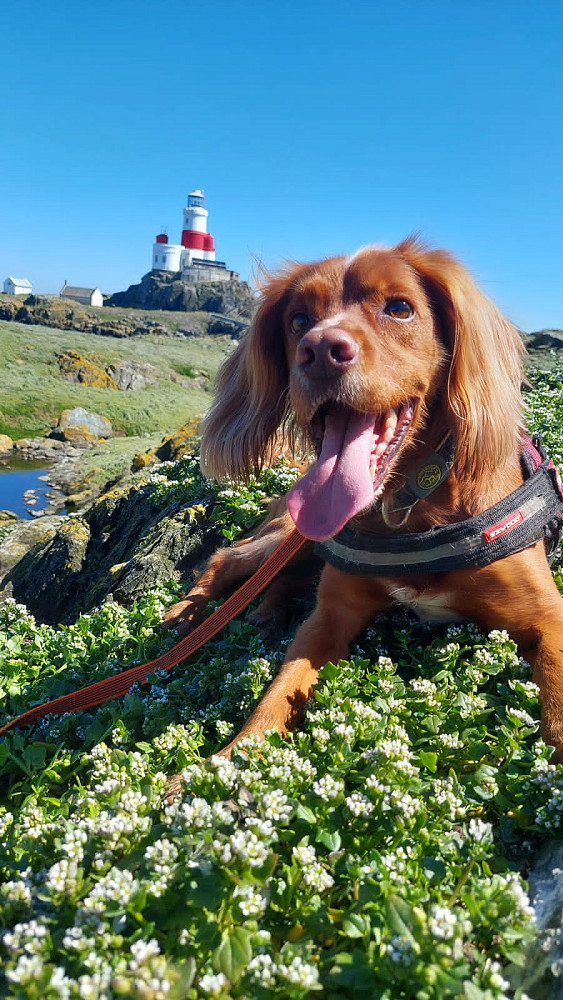
^Jinx taking a well deserved break during his searches of the Skerries, photo by Greg Morgan
One of the year's biggest challenges came in April, when gnaw marks were discovered on a wax chew block during routine surveillance on the Skerries. Thanks to the island's Biosecurity Plan, developed through the project, staff were able to quickly activate the response. Working with the Biosecurity for Wales team, they secured a Critical Situation Permit, collected equipment from our North Wales Rapid Response Hub and deployed a rodenticide grid across the island, while Greg and Jinx carried out Conservation Detection Dog searches for rats.
Fortunately, the evidence showed the gnaw marks were likely made by a single rodent that had died over the winter before establishing a population. It was a lucky but sobering reminder of the importance of staying vigilant. The suspicious marks were found on 20 April, and the response grid was in place by 24 April. Although just outside our 48-hour target, achieving a full response within four days on one of Wales' most challenging islands to access was a significant achievement.
The unsettled spring weather also made routine visits difficult, but Greg and Jinx still completed detection dog surveys on Skokholm and Ramsey. We were also joined by the Biosecurity for Scotland dog team to survey Bardsey, allowing Greg and Jinx to spend more time carrying out boat and cargo inspections which is another vital line of defence against rodents reaching the islands. Later in the year we were able to repay the favour when a rat was discovered on Mousa, Shetland. Greg and Jinx headed up to Shetland to assist the Biosecurity for Scotland team with island searches.
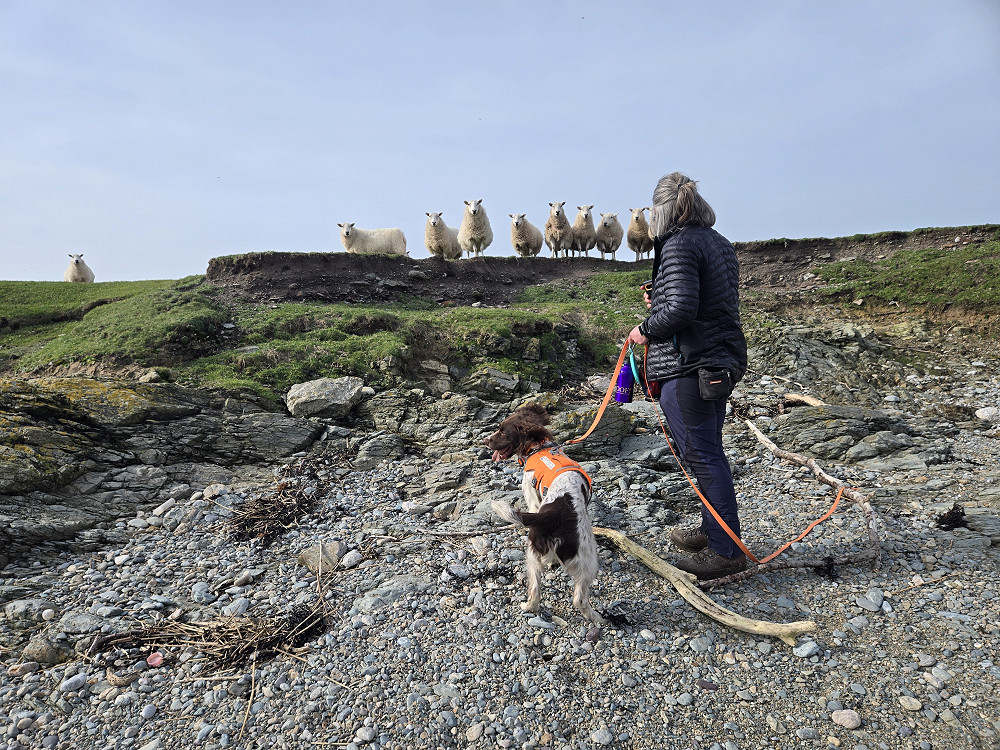
^Biosecurity for Scotland Conservation Detection Dog team, Rachel and Reid attracting an audience while searching Bardsey. Photo by Olivia Pargeter
After years of planning and several failed attempts, we finally reached Cardigan Island with the Wildlife Trust of South and West Wales to deploy surveillance equipment. The aim is to confirm the island remains rodent-free and use the findings to produce a tailored Biosecurity Plan.
We're also distributing new "mini hubs" packed with surveillance equipment to help island teams detect the earliest signs of rodents. Alongside standard and remote camera traps, the hubs include identification guides, footprint cards and scale rulers to help teams record and share evidence quickly. Additional training and equipment have also been provided following unusual predation events on Bardsey and Flatholm, strengthening local surveillance.
Away from the islands, we've been raising awareness before visitors even set sail. New biosecurity signage has been installed at Martin's Haven, following rat sightings around the jetty, and St Justinians to boost the awareness of biosecurity to visitors before they board the boat. Biosecurity for Wales beer mats and leaflets are being distributed through local businesses in areas local to island embarkation points. These provide simple biosecurity checklists and practical advice to help visitors protect Wales' internationally important seabirds.
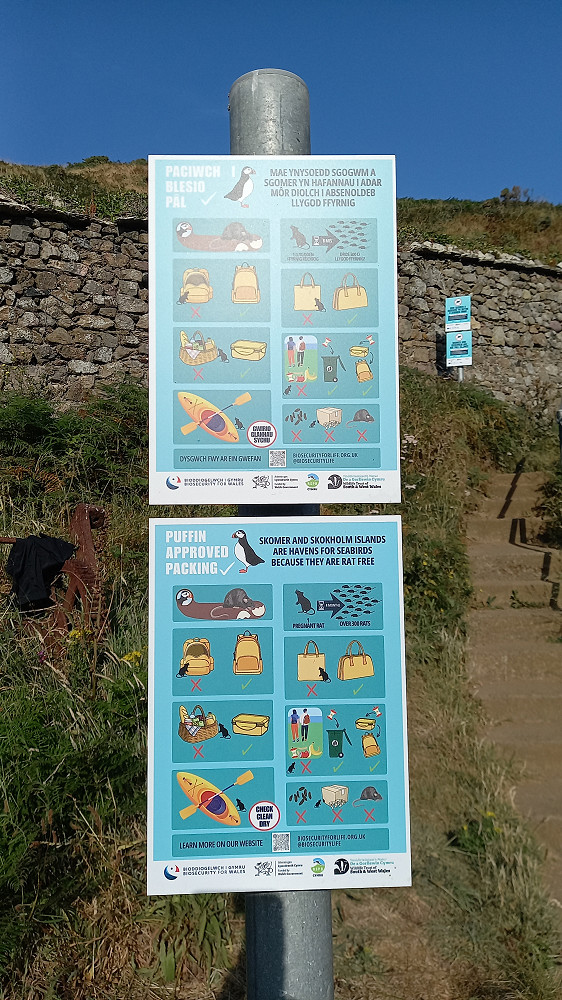
^Some of the new biosecurity signage at Martins Haven, photo by Olivia Pargeter
Finally, we've been working with Trinity House to provide feedback on its new Biosecurity Plan and checklist for teams travelling to rat-free lighthouse islands.
2026 has really demonstrated the value of preparation, partnership and rapid action in protecting Wales's seabird islands from invasive predators and we continue to work to embed biosecurity as business as usual.
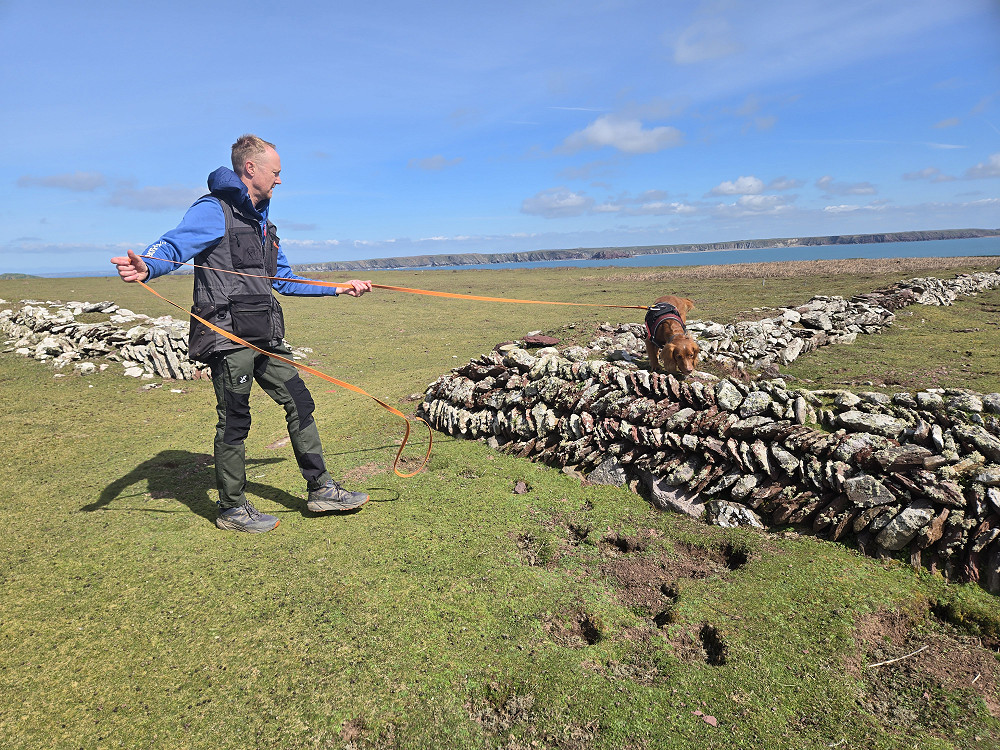
^Greg and Jinx searching Skokholm island, photo by Olivia Pargeter