
What better way to learn about the environment and island biosecurity than being a warden for the day?
On Mousa in Shetland we now have our ‘Be a Warden’ trail set up and open. Here children (and of course adults!) can have fun learning about biosecurity and getting hands on with an RSPB warden’s duties for a day.
When you arrive on the island you can pick up a backpack with tools you’ll need and a map for your walk around the island.
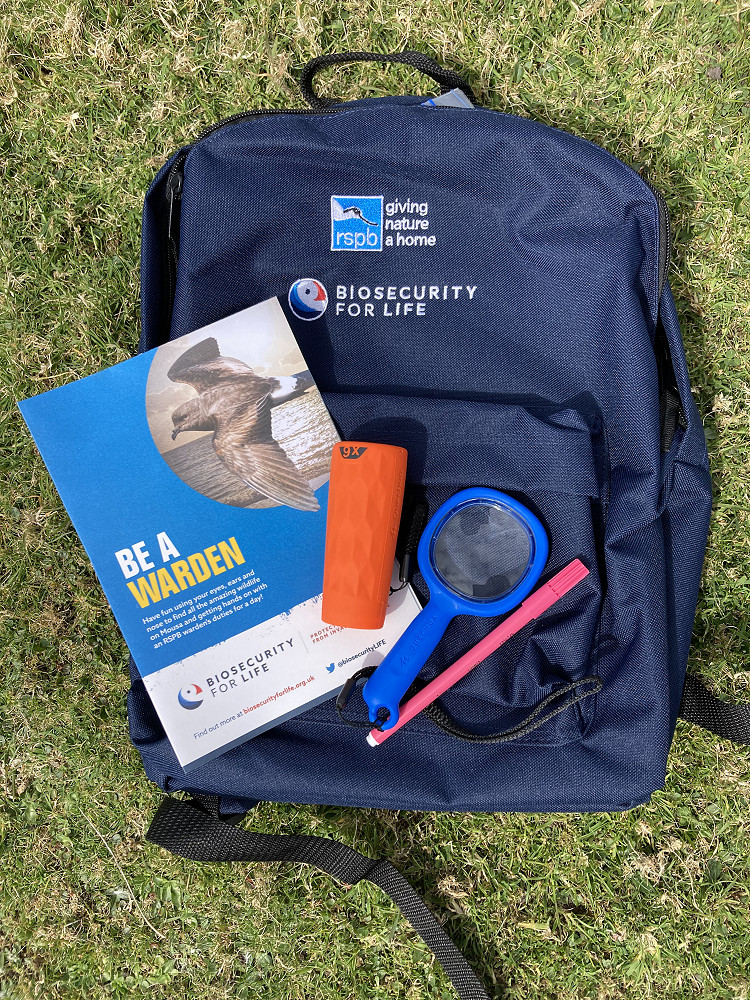
The warden’s pack you can take around Mousa with you. Credit Holly Paget-Brown
As you go around you can look out for the native seabird and plant species present on the island that it’s important to protect from invasives species. Mousa is special as it is home to thousands of European storm-petrels as well as many other seabirds such as great skuas and Arctic terns.
One of the key reasons European storm-petrel flock to Mousa is because it has no mammal predators living on it! This makes it a safe place to breed. It is important to keep Mousa free from invasive mammalian predators so our special native species can continue to thrive.
Keep an eye out for the surveillance that’s out on the island and see if you can spot any rodent teeth marks on the wax block in the ‘warden’s box’. This is a useful tool used on many islands to help monitor whether there are any rodent species present. The smell of the chocolate wax attracts them and they leave distinctive gnaw marks which can help to identify if they’ve reached an island.

The map to follow around Mousa with a few things to look out for along the way. Credit Holly Paget-Brown
You’ll learn about some key things to remember when you’re on Mousa and other seabird islands:
- - Don’t disturb the wildlife
- - Stay on the path
- - Take your rubbish home with you
- - Rats and mice like to hide in bags and boxes: check your bags for stowaways before getting on the boat
- - If you see an animal that shouldn’t be there, report it!
- - Don’t climb on the stone walls, there may be storm petrels nesting in there
- - Inspire others to do the same
So if you’re on Shetland why not take a trip to Mousa and find out more about biosecurity and our incredible native species!
As well as when on Mousa, keep an eye out on other seabird SPA islands in Shetland for invasive predators and follow the other key biosecurity guidelines you’ve learnt on your visits.
Mammalian predators aren’t the only non-native species in Shetland, there are many in the marine environment as well. As you walk around Mousa or if you’re ever close to the seashore or out for a swim, why not keep an eye out for some of our non-native and indicator marine species. Take a look at the Shetland Community Wildlife Group’s website for a guide to species of interest here: Identification Guides | Shetland Community Wildlife Group.


