
Afra Skene is the project’s Biosecurity Officer in Orkney and Shetland, which between them hold some of the UK’s largest seabird colonies. Here Afra shares some of the exciting progress being made in what are some of the most remote and spectacular locations in the country.
A cornerstone of Biosecurity for LIFE is working with the people who live on some of our most remote and special islands to reduce the risk of invasive non-native species reaching those islands. Awareness of the plight of vulnerable seabirds species and the dangers posed by invasive non-native species is often high on remote islands and as an islander myself I feel very protective of my island home.
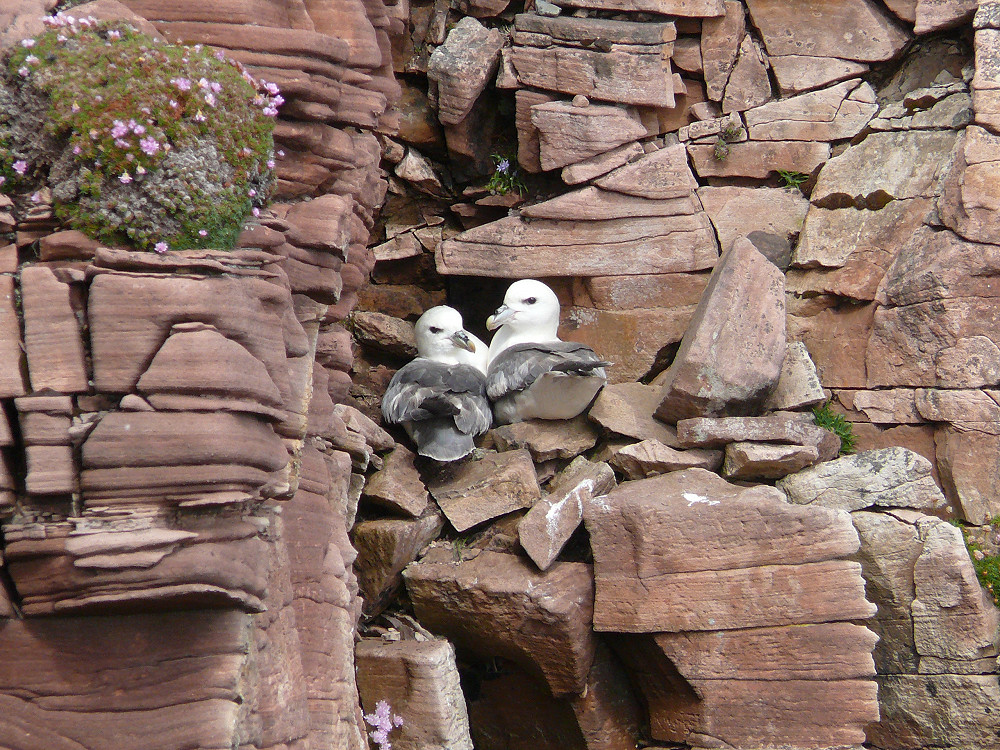
A pair of fulmars nesting on Papa Stour’s beautiful pink cliffs.
In Shetland the four inhabited islands we are focussing on are Fair Isle, Foula, Papa Stour and Fetlar. All these beautiful islands have multiple protected site designations emphasising the importance of their native wildlife. In particular they are home every summer to thousands of breeding seabirds. Many of these are ground-nesting, such as the globally vulnerable Leach’s storm-petrel and the Arctic tern, the species with the longest recorded migration on Earth. They therefore are highly vulnerable to introduced non-native predators like rats or stoat.
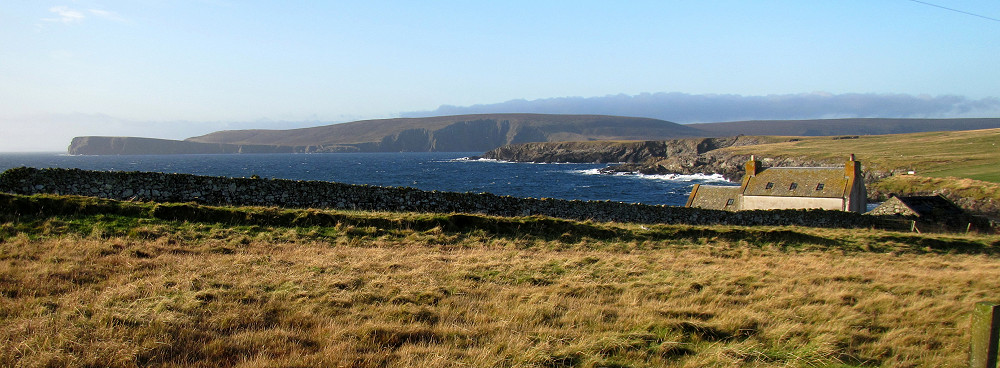
Fetlar – The Garden of Shetland. Looking into the Wick of Houbie
This year I have held meetings with communities on all four islands to pull together all the information needed for their own island biosecurity plans to keep these islands predator-free. Islanders were already very much aware of the risks posed by introduced species; not just predatory mammals but plants, insects and diseases as well. Whilst I am here to advise and assist where needed, almost all the work to compile the biosecurity plans will come from the islanders: local knowledge is paramount. It has been fantastically rewarding to be met with such enthusiasm for the project and I’m looking forward to making further progress on these stunning islands through the long winter months.
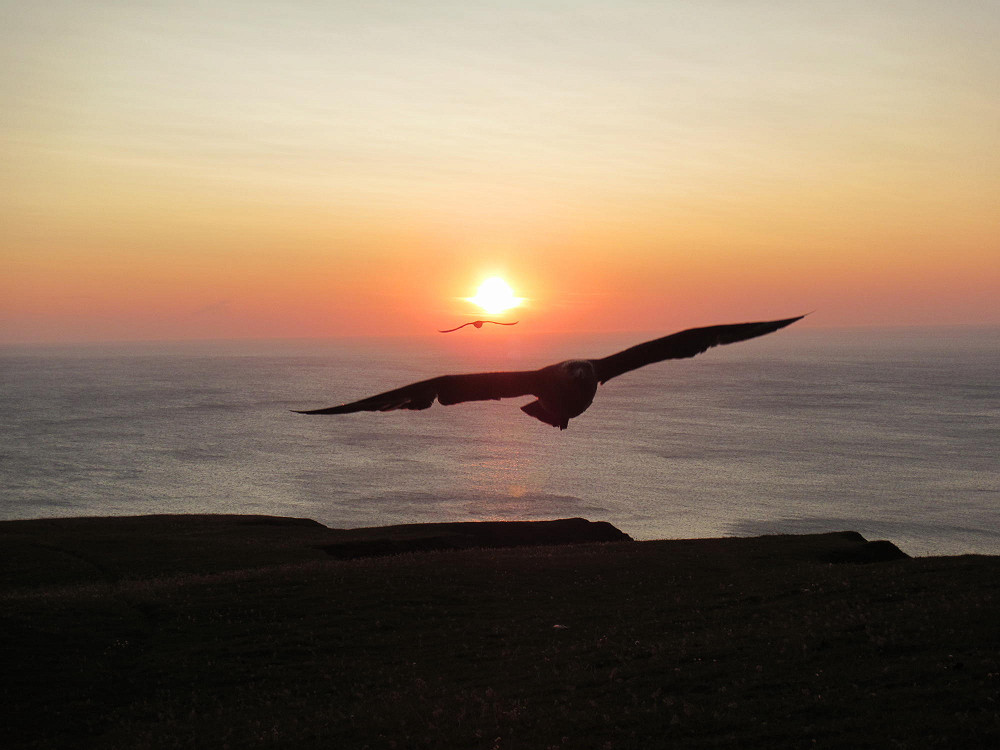
The iconic Great Skua or Bonxie in the Shetland sunset


